



Perché alcune persone affette da diabete sono preoccupate per l'esercizio fisico?
Le persone affette da diabete spesso temono di fare esercizio fisico a causa dell'aumento del rischio di ipoglicemia (basso livello di glucosio) durante l'attività. Questo è uno dei timori più comuni sia nei giovani che negli adulti affetti dadiabete1–5. Quando i livelli di glucosio scendono troppo durante o dopo l'attività fisica, si può avvertire una sensazione di disagio.
Infatti, le persone che hanno avuto episodi gravi di ipoglicemia durante l'attività fisica nell'ultimo anno sono più propense a evitarel'esercizio fisico1. La tabella sottostante mostra gli ostacoli più comuni che le persone con diabete devono affrontare quando si tratta di fare esercizio fisico e le strategie per aiutarle a superarli. Vogliamo che le persone si sentano più sicure nella gestione del loro diabete e possano godere dei benefici di un'attività fisica regolare!
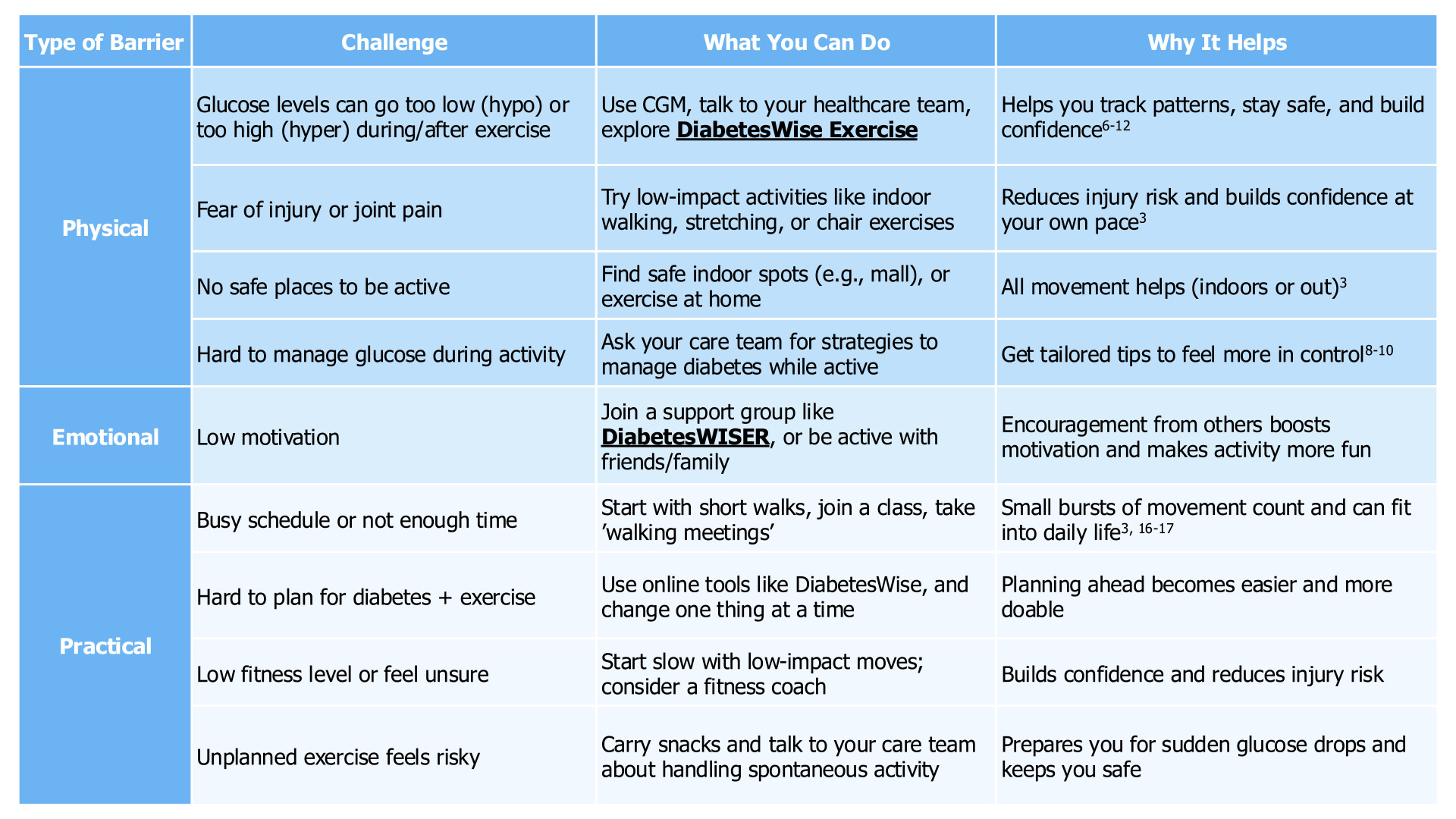
Gli ostacoli più comuni all'esercizio fisico
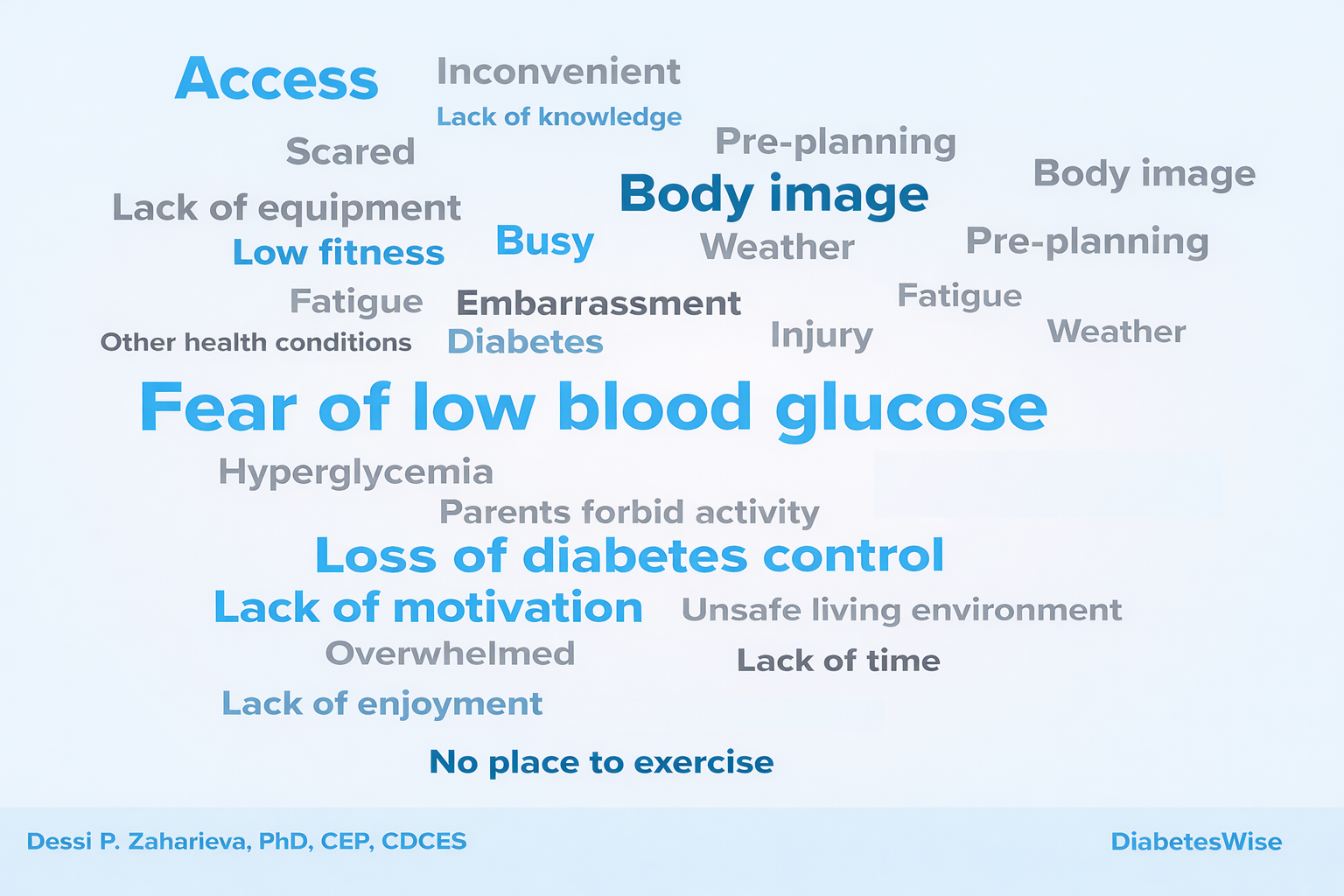
Nell'immagine sottostante, più grande è la parola, più le persone l'hanno menzionata come ostacolo all'esercizio fisico1–4. Questo grafico aiuta a mostrare ciò che generalmente preoccupa di più le persone con diabete quando si tratta di essere attive. Le esperienze di ognuno sono diverse e ogni ostacolo è valido5,6,11,17,19.
Physical Activity x Stigma Resources
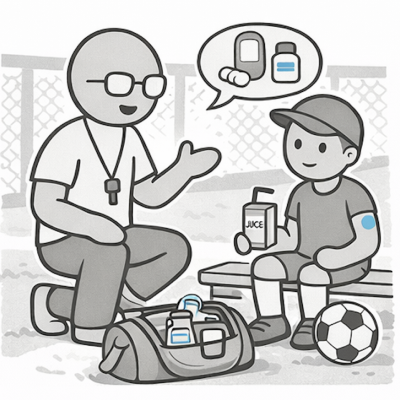
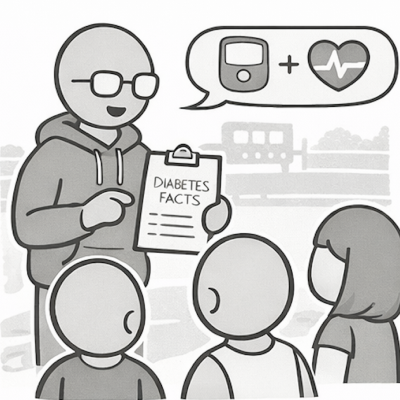
Diabetes management looks different for everyone. By learning the basics, addressing stigma, and working with athletes on a game plan, coaches can support both safety and performance during practices and competition.
Riferimenti
1. Brazeau AS, Rabasa-Lhoret R, Strychar I, Mircescu H. Barriers to physical activity among patients with type 1 diabetes. Diabetes Care. 2008;31(11):2108-2109. doi:10.2337/dc08-0720
2. Roberts AJ, Taplin CE, Isom S, et al. Association between fear of hypoglycemia and physical activity in youth with type 1 diabetes: The SEARCH for diabetes in youth study. Pediatr Diabetes. 2020;21(7):1277-1284. doi:10.1111/pedi.13092
3. Tripathi D, Vikram NK, Chaturvedi S, Bhatia N. Barriers and facilitators in dietary and physical activity management of type 2 diabetes: Perspective of healthcare providers and patients. Diabetes Metab Syndr. 2023;17(3):102741. doi:10.1016/j.dsx.2023.102741
4. Brazeau AS, Mircescu H, Desjardins K, et al. The Barriers to Physical Activity in Type 1 Diabetes (BAPAD-1) scale: predictive validity and reliability. Diabetes Metab. 2012;38(2):164-170. doi:10.1016/j.diabet.2011.10.005
5. Martin CG, Pomares ML, Muratore CM, et al. Level of physical activity and barriers to exercise in adults with type 2 diabetes. AIMS Public Health. 2021;8(2):229-239. doi:10.3934/publichealth.2021018
6. Glyn T, Fourlanos S, Paldus B, et al. The Need to Prioritize Education and Resources to Support Exercise in Type 1 Diabetes: Results of an Australian Survey of Adults With Type 1 Diabetes and Health Providers. Can J Diabetes. 2024;48(2):105-111.e5. doi:10.1016/j.jcjd.2023.11.003
7. Lascar N, Kennedy A, Hancock B, et al. Attitudes and barriers to exercise in adults with type 1 diabetes (T1DM) and how best to address them: a qualitative study. PLoS One. 2014;9(9):e108019. doi:10.1371/journal.pone.0108019
8. Logan JE, Prévost M, Brazeau AS, et al. The Impact of Gender on Physical Activity Preferences and Barriers in Adults With Type 1 Diabetes: A Qualitative Study. Can J Diabetes. 2024;48(6):401-408. doi:10.1016/j.jcjd.2024.05.003
9. Cockcroft EJ, Narendran P, Andrews RC. Exercise-induced hypoglycaemia in type 1 diabetes. Exp Physiol. 2020;105(4):590-599. doi:10.1113/EP088219
10. Get Active » DiabetesWise. Accessed July 22, 2025. https://diabeteswise.org/exercise
11. DiabetesWISER. DiabetesWISER. Accessed July 22, 2025. https://community.diabeteswise.org/
12. Livny R, Said W, Shilo S, et al. Identifying sources of support and barriers to physical activity in pediatric type 1 diabetes. Pediatr Diabetes. 2020;21(1):128-134. doi:10.1111/pedi.12938
13. Chinchilla P, Dovc K, Braune K, et al. Perceived Knowledge and Confidence for Providing Youth-Specific Type 1 Diabetes Exercise Recommendations amongst Pediatric Diabetes Healthcare Professionals: An International, Cross-Sectional, Online Survey. Pediatric Diabetes. 2023;2023(1):8462291. doi:10.1155/2023/8462291
14. Kime N, Pringle A, Zwolinsky S, Vishnubala D. How prepared are healthcare professionals for delivering physical activity guidance to those with diabetes? A formative evaluation. BMC Health Serv Res. 2020;20(1):8. doi:10.1186/s12913-019-4852-0
15. Zaharieva DP, Ritter V, Bishop FK, et al. Physical Activity Is Associated With Improved Glycemic Outcomes in Newly Diagnosed Youth With Type 1 Diabetes: 4T Exercise Program. Diabetes Care. Published online July 1, 2025:dc250765. doi:10.2337/dc25-0765
16. Michaud I, Henderson M, Legault L, Mathieu ME. Physical activity and sedentary behavior levels in children and adolescents with type 1 diabetes using insulin pump or injection therapy - The importance of parental activity profile. J Diabetes Complications. 2017;31(2):381-386. doi:10.1016/j.jdiacomp.2016.11.016
17. Kennedy A, Narendran P, Andrews RC, Daley A, Greenfield SM, EXTOD Group. Attitudes and barriers to exercise in adults with a recent diagnosis of type 1 diabetes: a qualitative study of participants in the Exercise for Type 1 Diabetes (EXTOD) study. BMJ Open. 2018;8(1):e017813. doi:10.1136/bmjopen-2017-017813
18. Paiement K, Frenette V, Wu Z, et al. Is Better Understanding of Management Strategies for Adults With Type 1 Diabetes Associated With a Lower Risk of Developing Hypoglycemia During and After Physical Activity? Can J Diabetes. 2022;46(5):526-534. doi:10.1016/j.jcjd.2022.02.009
19. Prévost MS, Rabasa-Lhoret R, Talbo MK, Yardley JE, Curry EG, Brazeau AS. Gender Differences in Strategies to Prevent Physical Activity-Related Hypoglycemia in Patients With Type 1 Diabetes: A BETTER Study. Diabetes Care. 2022;45(3):e51-e53. doi:10.2337/dc21-1899